














German Prosecutors File Charges in $345M ‘Operation Chargeback’
- July 11, 2026
- 0
- 2 min read

Sponsored Content
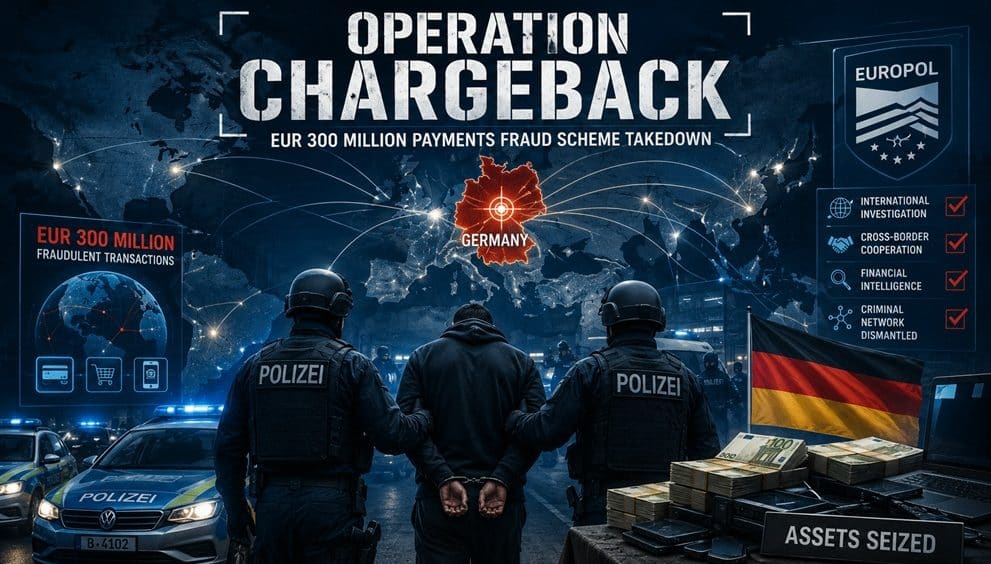
German prosecutors filed charges last week in a EUR 300 million ($345 million) payments fraud case that affected 4.3 million credit cardholders from 193 countries between 2016 and 2021. The case, dubbed “Operation Chargeback,” provides a great window into the transnational, crime-for-hire nature of organized crime networks involved in payments fraud today.
An international investigation discovered three criminal networks operating across Europe, with roots in Germany, that attempted to defraud as much as $750 million euros ($862 million) from victims by means of fake online subscriptions to websites that offered pornography, dating and streaming services. Among 18 individuals arrested and 44 suspects targeted, were five executive officials and one compliance officer from four German payment service providers allegedly involved in the scheme. Operation Chargeback likely qualifies as the largest case of corruption in the German financial system since the Wirecard payment processor scandal in 2020.
The suspects in Operation Chargeback allegedly created around 19 million fake online subscriptions between 2016 and 2021. The subscription charges were kept low – about 50 euros ($58) per month – and listed with obscure billing descriptors to avoid detection. According to Europol, the subscription websites were designed to evade search engine indexing, and were only accessible only through directly provided URLs.
The criminal groups involved in Operation Chargeback used shell companies registered primarily in the U.K. and Cyprus to distribute the fraudulent transactions to evade detection and chargebacks and then launder the money. Fraud-as-a-service providers were utilized to recruit phony company directors and Know Your Customer (KYC) documents, typically used by banks to verify that clients’ operations are legitimate, to create these shell companies.
Arrests in the case were carried out on November 4, 2025. German authorities alone secured assets worth over EUR 35 million ($40 million) in Germany and Luxembourg at the time of the arrests, with Europol providing cross-border support, according to reporting by the Organized Crime and Corruption Reporting Project (OCCRP).



