















Agentic Commerce Disputes: A Fraud Window Left Open

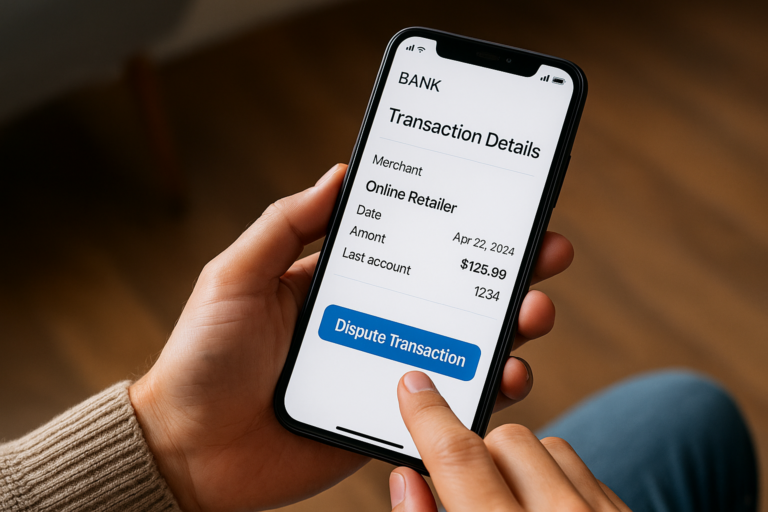
The credit card networks just opened the door to agentic commerce and agentic commerce disputes; they left the fraud window open, too. This is because when an AI agent buys on your behalf, you keep your chargeback rights. However, the dispute system doesn’t know what to do with that yet.
In March 2026, Mastercard and Santander completed what they called Europe’s first live end-to-end payment executed by an AI agent. Weeks later, Visa expanded its Agentic Ready program globally. American Express launched a developer kit for agent-initiated transactions and pledged to cover erroneous purchases made by verified agents on its network. Three major networks, in roughly 60 days, made agentic commerce real.
What none of them announced was how disputes would work.
The Buy Side Is Live; the Post-Transaction Side Isn’t.
Agentic commerce means a consumer delegates purchasing authority to an AI. The agent shops, selects, authorizes, and completes the transaction. The cardholder may never touch the checkout page. In many implementations, they may not even see a real-time confirmation before the purchase clears.
This creates something the current chargeback system has no framework for: a transaction where the consumer genuinely authorized the agent, but can plausibly claim they didn’t authorize the specific purchase.
That distinction matters enormously. Chargeback rights weren’t revoked when you handed your card to an AI. The CFPB’s January 2026 advisory on autonomous-agent purchases under Regulation Z was explicit: consumer dispute rights survive the delegation. The agent mandate narrows those rights only where it is appropriately scoped and documented. For the vast majority of early agentic commerce deployments, that documentation doesn’t exist.
The result is a new and structurally durable friendly fraud claim for agentic commerce disputes. “I didn’t authorize that, my agent did.”
Authentication Is Not the Same as Intent
The network solutions being built right now are focused on a real problem, just not the right one. Mastercard’s Agentic Tokens bind a tokenized card credential to a specific agent and a specific commerce policy. Visa’s Trusted Agent Protocol uses cryptographic authentication to create verified records for agent-initiated payments. These tools are designed to answer one question: was this a legitimate agent, or a malicious bot?
That is a necessary question to answer. However, it is not sufficient.
What agentic tokens cannot answer is whether the consumer agrees the agent acted within the scope they intended. A verified, authenticated, cryptographically-signed agent can still buy the wrong thing, exceed an implied budget, misinterpret a preference, or act on stale instructions. When that happens, the consumer has a receipt they didn’t expect and a chargeback regime that still treats them as a cardholder with full dispute rights.
Traditional friendly fraud requires a consumer to lie: “I never made this purchase.” Agentic commerce makes the claim defensible without lying. The consumer did authorize the agent. The agent made a decision the consumer now disputes. Those are meaningfully different, and the chargeback reason code system has no category for either.
Early Incoming Data Already Shows the Problem
Disputes on agent-initiated transactions are running at roughly 2.4 times the rate of comparable human-initiated card-not-present transactions, according to early data cited by TrustSphere’s risk intelligence unit. Peter Tapling, vice chair of the U.S. Faster Payments Council, put it plainly last year: traditional card dispute rules don’t account for AI initiating purchases that technically follow authorization procedures but defy user intent.
This isn’t an edge case. It’s the default state of agentic commerce disputes until the infrastructure catches up.
Merchants are the ones absorbing this asymmetry. They receive a valid, tokenized, network-authenticated transaction. They fulfill the order. Then they receive a dispute they have no evidence playbook to fight, because the authorization trail proves the agent acted, not that the consumer approved the specific outcome.
What Needs to Change with Agentic Commerce Disputes
Agentic mandate metadata needs to be captured at authorization and stored as part of the transaction record. What was the agent permitted to buy? Within what parameters? Was the consumer notified before or after? Right now, that information lives in the agent platform’s logs, if it exists at all, and has no path into the agentic commerce dispute process.
Networks need reason codes that reflect agent-initiated dispute reality. “Merchandise not as described” doesn’t capture “agent exceeded mandate.” Issuers need workflows that distinguish between consumer fraud, agent error, and scope disputes. None of those categories exist today.
Until they do, every agentic commerce transaction carries an invisible liability that doesn’t appear in the authorization signal. The networks built a door for AI agents to walk through. Nobody built the dispute infrastructure for when the consumer follows them in and says they didn’t mean to.
The economics of agentic commerce are being priced without this variable. That won’t last. Dispute rates will rise. Merchants will absorb the losses first, as they always do. And the chargeback rules that are supposed to protect everyone in the system are going to be years behind the transactions they’re meant to govern. Eventually, something will have to give.