




Travel Chargebacks and the Iran Conflict: Who Is At Fault?

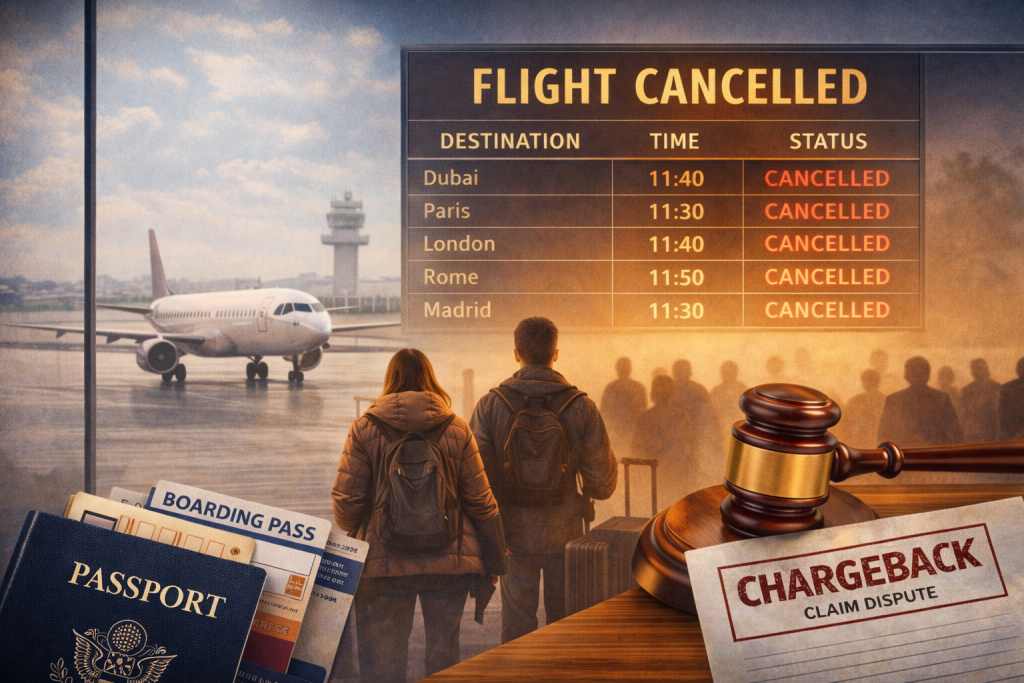
The conflict between the US, Israel, and Iran has so far caused more than 60,000 flight cancellations since late February, affecting an estimated 6 million passengers and opening the door to a wave of travel chargebacks. At seven major regional airports including Dubai, Doha, and Abu Dhabi, cancellations exceeded 21,300 flights. Airlines, travel platforms, and any merchant connected to regional travel are now entering a familiar phase: the chargeback wave.
Customers did not receive what they paid for. They are going to their banks. Disputes are being filed.
At that point, the question stops being “what happened?”. It becomes “what can be proven within the rules?”.
In other words, this column is about force majeure chargebacks, cancelled flights, and why the credit card system still picks a side.
This Is Not a New Travel Problem
Force majeure disruptions hit the travel industry with enough frequency that the pattern is now almost predictable. COVID-19 is the obvious benchmark. MasterCard reported a 300% increase in chargeback volume in March 2020, followed by an additional 100% increase in April. Typically, only 20% of its chargebacks were non-fraud-related, but that share rose to over 70% during the pandemic’s early months. Across the broader airline industry, chargebacks normally account for around 0.5% of all sales, but COVID pushed that ratio above 2% in some cases, quadrupling the cost exposure for airlines that had already lost much of their revenue.
COVID was the extreme case, but it was not an isolated one. Airlines faced similar surges in the aftermath of the 2010 Eyjafjallajökull eruption, the hurricanes that disrupted spring break travel across the Caribbean and Gulf Coast, and the 2022 Ukraine war that shuttered Eastern European airspace. Travel chargebacks have increased by 50% on average since the pandemic, according to Amadeus, a Spanish travel technology provider, and that baseline was already elevated before the current conflict began. Research from Outpayce, a large travel technology provider, shows that 71% of travel companies have seen chargeback growth in recent years, with disputes rising at roughly 30% year over year.
The Iran conflict adds a new layer.
Why Force Majeure Does Not Help You in a Dispute
Force majeure is a contract concept. The chargeback system is not a contract. It is a rules-based process that runs on predefined reason codes, evidence requirements, and deadlines, regardless of external circumstances.
When a customer files a dispute, the issuer sees one thing: a charge for a service that was not delivered. The underlying cause, whether war, weather, or airspace closure, is largely irrelevant to how the claim is categorized. It becomes “services not rendered.” The merchant is then on the hook to prove otherwise, or the funds flow back to the cardholder automatically.
I experienced this firsthand. I had a snowboard vacation booked through a travel package provider, including flights, hotel, ski pass, equipment, and lessons. When the conflict escalated and flights were cancelled, the merchant communicated clearly. The situation was outside their control. But the refund was not straightforward. The hotel had already been paid to the supplier and was not confirmed refundable. Even though the full service was never delivered, only part of the payment was guaranteed to come back.
The merchant offered a full voucher for a future trip. That created a resolution path, and I accepted it. But with a less flexible policy, this would have been a chargeback. And in that dispute, the reason for the cancellation would not have been the central issue. The question would have been far simpler: was the service delivered, or not?
What Travel Merchants Should Do Differently
You cannot change how the system works. You can change how you operate within it.
Speed matters more than explanation. The longer the gap between cancellation and resolution, the more disputes you generate. Customers who feel ignored file claims. Customers who get a clear answer, even a partial one, often do not.
Evidence needs to cover communication, not just the transaction. You need to show that the customer was informed of the disruption, that your policy was clear and accessible in advance, and that reasonable alternatives were offered. The fact that an airport was closed or a war broke out is context. It is not a defense by itself.
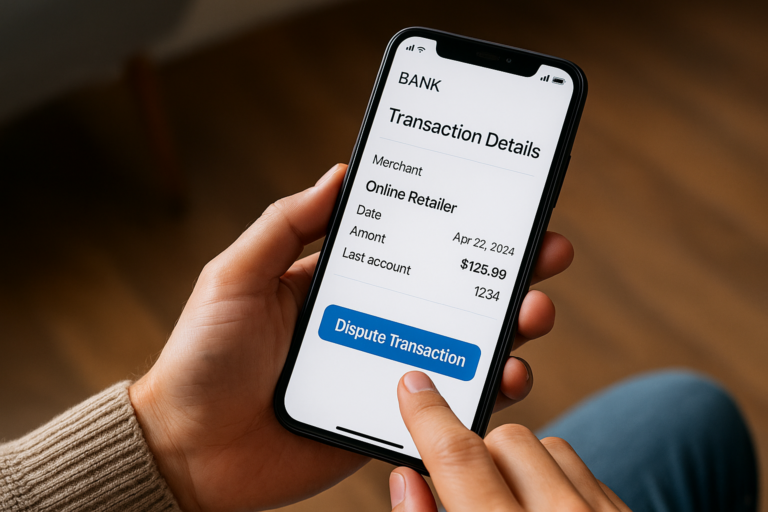
Vouchers and credits only work if customers accept them. Research shows that 62% of travelers perceive chargebacks as easier than seeking a refund from the merchant directly, and mobile banking apps have made filing a dispute a two-minute task. If your resolution offer adds friction, customers will skip it.
The Real Issue
Nearly half of travel companies see fewer than 40% of the chargebacks they contest closed in their favor. That is a losing baseline even when merchants are clearly not at fault. The system does not pause for geopolitical context. It processes claims based on what is in front of it.
Merchants who navigate force majeure events well are not the ones who argue fairness most effectively. They are the ones who reduce the window between disruption and resolution, communicate before customers start searching for alternatives, and treat the chargeback system as a constraint to design around, not a process to appeal to.
Because when no one is at fault, the system still picks a side in travel chargebacks. And by default, it is not the merchant.