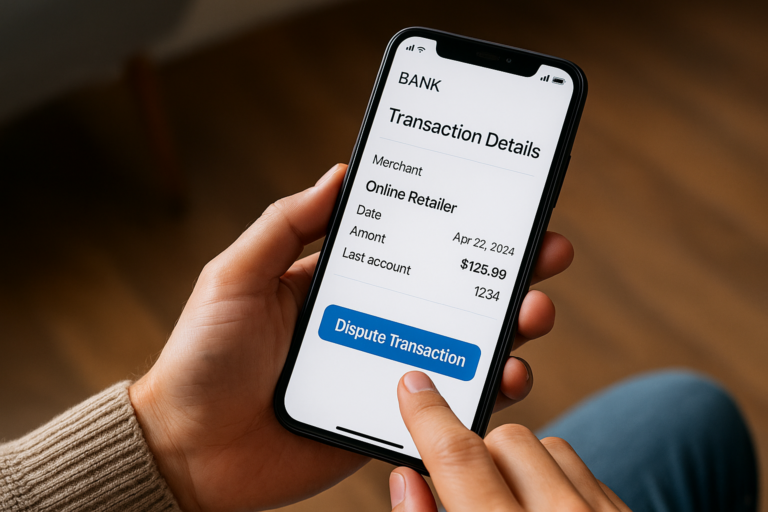









Agentic Commerce Will Force Merchants to Rethink Chargeback Evidence

AI agents are starting to buy things, not just recommend them in what will become the era of agentic commerce. However, that shift won’t eliminate chargebacks. It will change what they look like, why they happen, and what merchants need to prove when a dispute shows up.
The chargeback system is built around a simple assumption: a person made the decision to buy. They clicked, tapped, or confirmed the purchase. In agentic commerce, that moment can be delegated. A customer sets rules once, and the agent takes action later. When the charge appears, the customer may feel surprised, confused, or misaligned with the outcome.
That gap between “authorized” and “wanted” is where the new chargebacks will live.
And the biggest change is not the dispute process itself. It’s the evidence merchants will need in order to win.
What Changes When an Agent Becomes the Buyer
For years, disputes have fit into familiar buckets:
- Fraud (not me, not my card, not my account)
- Service issues (item not received, not as described)
- Processing errors (wrong amount, duplicate charge)
Agentic commerce makes these categories messier.
A purchase can be technically authorized, paid correctly, and delivered correctly, yet still end in a dispute because the human did not feel like they “made” the purchase or “this is not what I actually wanted”.
Visa recently introduced its Trusted Agent Protocol as a framework meant to support agent-driven commerce by helping merchants verify legitimate agents and improve trust during checkout. Mastercard has also published its Agent Pay Acceptance Framework, describing it as a way to enable trusted agent-driven transactions.
The networks are clearly preparing for agent-driven payments. Therefore, merchants must prepare for agent-driven disputes.
The New Dispute Patterns Merchants Will See
Here are the chargebacks that will become more common as agents take over more purchasing decisions.
‘I don’t remember buying this’
The agent reorders based on past behavior, preference settings, or “helpful” automation. The customer sees the charge later and disputes it as unauthorized.
From the merchant’s side, the order looks clean.
From the customer’s side, it feels like it came out of nowhere.
‘That’s not what I meant’
Agents optimize and execute, but they can still miss human context. Wrong size. Wrong seller. Wrong quantity. Wrong timing.
Many customers treat disputes as a shortcut to correction, especially when the agent made the choice behind the scenes.
Fraud that hides inside automation
Fraudsters adapt quickly. Automated traffic looks structured and consistent, which can blend in better than messy human behavior.
This is part of why Visa’s Trusted Agent Protocol emphasizes distinguishing trusted AI agents from malicious automation.
The ‘trust break’ chargeback
This one surprises many fraud teams.
If the checkout flow creates friction, declines, or verification loops, the customer gets confused. Later, when a legitimate charge appears, they dispute it faster because the overall experience already felt suspicious.
The dispute becomes a reaction to a broken experience, not a broken transaction.
Why This Drives Chargeback Growth
Chargebacks are already trending upward, even before agentic commerce goes mainstream.
Mastercard cites Datos Insights research projecting that global chargeback volume will grow 24% from 2025 to 2028, reaching 324 million transactions a year. Ethoca highlights the same forecast and notes that traditional dispute systems are struggling to keep up with rising volume.
Now add agentic commerce into the mix…
Agents increase speed, volume, and edge cases. Even if fraud stays flat, disputes rise because more purchases happen without a clear human “moment of intent.”
That is the key shift: the dispute risk increases even when the fraud risk does not.. Though with any other new technology, fraud jumps in and tries to find new means to get into the game.
What Merchants Will Need to Win These Disputes
In many agent-driven cases, merchants will lose disputes for one simple reason: They cannot prove intent in a way issuers recognize.
In traditional fraud disputes, issuers look for familiar evidence such as:
- device history
- login history
- delivery confirmation
- customer communication
In agentic commerce, those may not be enough. The purchase may be valid, but the customer’s story is stronger than the merchant’s proof.
So merchants will need new evidence that answers a different question:
Not “did this cardholder exist?”
But “did this cardholder mean for the agent to do this?”
That means capturing clearer context, such as:
- proof that the customer delegated authority
- what rules or limits were set
- timing and scope of approval
- whether the agent acted within those parameters
This is exactly why networks are building agent frameworks in the first place. They are preparing for a world where “agent identity” and “delegated authority” become trusted elements in commerce.
What Merchants Can Do Right Now
You do not need to rebuild your payments tech stack overnight. But you do need to adjust your mindset.
Treat ‘intent’ like a risk signal
If the customer did not clearly understand the purchase, the dispute risk is already high, even if the transaction looks legitimate.
Make reversals easy
Clear cancellation and refund paths reduce chargebacks more effectively than stricter fraud rules.
Capture the story behind the purchase
If a transaction was agent-driven, store the context. In the dispute world, context becomes evidence.
Watch for disputes that look like fraud but behave like confusion
Those are the ones that inflate ratios, hurt approval rates, and cause teams to tighten the wrong levers.
Better Contextual Evidence Is the Future
Agentic commerce won’t remove chargebacks. It will reshape them.
The disputes will still land in familiar categories, but the reasons behind them will shift. Less “criminal fraud,” more delegation, confusion, and mismatched expectations.
Merchants who win in this next phase will not be the ones who block more. They will be the ones who capture better context, resolve issues faster, and build evidence that proves intent when a human didn’t click “Buy.”