

















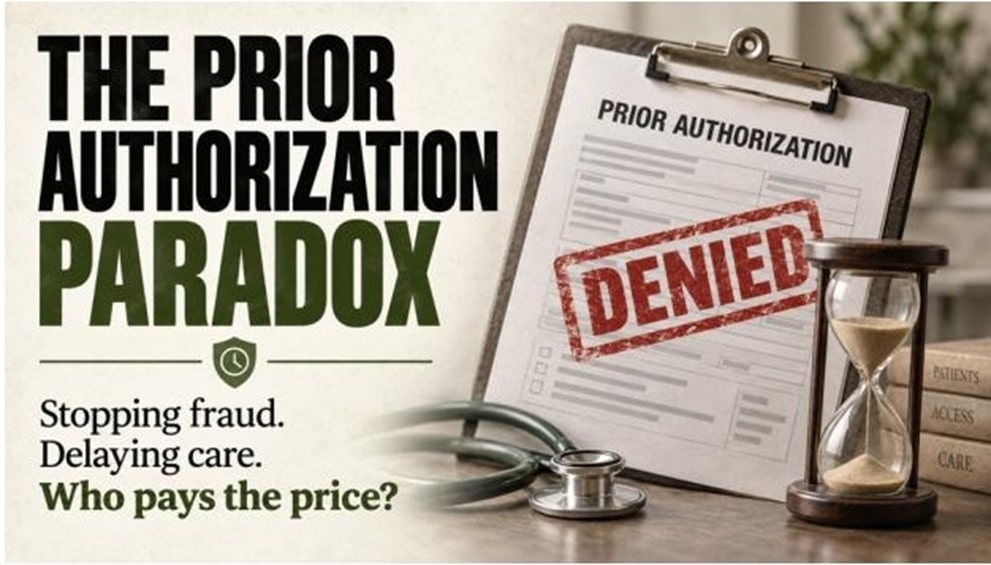
The Prior Authorization Paradox in Healthcare Fraud
- September 30, 2026
- 0
- 5 min read

Sponsored Content
Prior authorization was supposed to be a main abuse control for healthcare. Yet at the same time Medicare rolled out preauthorization, the Centers for Medicare and Medicaid Services (CMS) cut reimbursement for wound grafts from tissue banks from $1,450 to $127 per square centimeter, and launched an AI-assisted prior authorization pilot in the same stretch.
I spent years in payment card fraud, so I like the concept behind prior authorization. A cardholder swipes at checkout, the merchant gets approval, and the customer walks out with the goods. That approval isn’t the actual payment; settlement comes later. Healthcare works the same way in structure: the payer approves care before the patient receives it, and the claim gets paid afterward. The gap is speed. Card authorization takes 30 seconds. Healthcare prior authorization, even under this new pilot, takes up to three days.
The Skin Graft, or the Skin Grift
Skin grafts made from amniotic tissue heal wounds naturally over time. Medicare spending on these treatments jumped from $389 million in the third quarter of 2022 to $2.88 billion in the third quarter of 2024. CMS now projects $15 billion in Medicare spending on these products for 2025.
The Department of Justice ran a takedown covering 455 defendants and more than $6.5 billion in alleged fraud, all tied to skin grafting. An Arizona ring billed over $4 billion and collected more than $2 billion, paying roughly 40% of charges back as kickbacks. Agents seized a $135,000 Maserati during that bust. In Texas, prosecutors say one nurse practitioner billed $906 million, averaging more than $1 million per patient. That case also turned up a $594,000 Ferrari and an $865,000 Bulgari necklace.
Claims averaging over $1 million per patient don’t need advanced analytics to catch. Basic detective work catches those.
Medicare Got WISeR
Medicare built a waste control program called the Wasteful and Inappropriate Service Reduction model, or WISeR. It went live in January 2026 in Arizona, New Jersey, Ohio, Oklahoma, Texas, and Washington. The program targets five service categories: skin substitutes, orthopedic pain management, electrical nerve stimulator implants, incontinence control devices, and impotence treatment.
Vendors who review and deny services earn a share of the savings those denials produce. Across the six pilot states, WISeR touches more than 200,000 Medicare beneficiaries a year, close to a fifth of the national volume for these services.
Where the Prior Authorization Friction Hits
Almost 90% of patients in the WISeR pilot came in for back and joint pain treatment. Only about 9% came in for skin substitute treatment. Nearly all the fraud sits inside that 9%.
The rollout hasn’t gone smoothly. Providers report long waits for approval, denials for care Medicare’s own rules should cover, broken online portals, and decisions that blow past federal deadlines. Through all of this, the graft reimbursement rate stayed down at $127 per square centimeter, cut from $1,450.
The False-Positive Problem
Medicare Advantage gives us a clean data set to measure the efficacy of prior authorization. Insurers made 52.8 million prior authorization determinations in 2024 and denied 7.7% of them, or 4.1 million requests. Only 11.5% of those denials went to appeal. Of the appeals filed, 80.7% got overturned.
Run those numbers through a fraud analyst’s lens. A control that reverses four times out of five when someone challenges it wouldn’t last a quarter in a card portfolio. In healthcare, that control survives because most people never appeal. The denial rate looks clean only because the false positives stay silent.
The WISeR Vendors Hold the Decision Pen
WISeR vendors earn a cut of the money saved from every denial. Those same vendors decide which doctors earn a “gold card,” a pass that skips review entirely.
No bank pays its fraud vendor a bonus per declined transaction. Card fraud teams grade a model on two numbers together: fraud caught and good customers blocked by mistake. Pay for only one number, and the model learns to chase that number, nothing else.
Fraud Stopped, or Fraud Disguised
Advance approval does cut spending where Medicare applies it. The Government Accountability Office found Medicare’s pilot programs cut spending on covered items by 17% to 74%, saving an estimated $1.1 billion to $1.9 billion. More than half of that showed up in the first six months. What the GAO never checked: whether the money simply moved somewhere else.
The timing here is hard to dismiss. After Medicare required advance approval for more equipment, like power wheelchairs and back braces, skin substitute billing jumped from $389 million a quarter to $2.88 billion. Timing alone doesn’t prove causality. But fraud rings rarely shut down when Medicare blocks one product. They move to whatever Medicare still pays without asking questions.
Fixes Worth Making
The question remains what should Medicare do about fraudulent and wasteful billing practices. The answer: Cut the profit first. Lowering what Medicare pays for an abused product stops a scheme faster than any review line. Pay vendors for confirmed fraud and billing errors they actually stop, and report their overturn rate alongside their savings number. A denial rate alone tells you nothing about how many bad claims got blocked.
Give reliable doctors with steady billing a pass, and point reviews at the outliers who need scrutiny. Vendors can suggest which providers earn that pass, but Medicare should keep final say. To catch fraud that’s shifted rather than stopped, watch adjacent billing categories for spikes after a new rule takes effect.
A Practitioner’s Closing Thought on Prior Authorization
Medicare paid out $28.8 billion in error in fiscal year 2025, about $3 billion less than the year before. Medicare draws a hard line between payment errors and fraud. Fair enough. But the pilot raises an uncomfortable question. If prior approval is the answer to healthcare fraud, why did a price cut, not a review process, stop a $2 billion skin grafting scheme?