


















How Scammers Use A Fake Tax Freeze to Trap Victims
- November 28, 2026
- 0
- 9 min read

Sponsored Content
A recent real Ohio crypto forfeiture case shows how a fake tax freeze convinced a victim his money was safe, and why tracing stolen crypto, seizing it and returning it are three separate problems.
The Eastlake, Ohio resident was sure his crypto trading was paying off. The platform looked impressive. The profits looked great. His excitement was sky-high.
The account he was shown was worth about $860,000, including supposed gains. The friendly adviser managing his investments seemed to know exactly what he was doing.
Then he asked to withdraw his money.
The adviser explained that the Internal Revenue Service (IRS) had frozen the account, because his accountant hadn’t filed his tax returns since 2021.
However, there was no freeze.
The story was there to explain why the money couldn’t come back to him, without admitting that the balance he’d been shown was never real and never in his control.
In reality, according to the U.S. Department of Justice, he lost $198,232.92, transferred to crypto accounts controlled by the fraudsters.
And he is far from alone.
According to the FBI’s annual report, the Internet Crime Complaint Center (IC3) received 1,008,597 complaints in 2025, an average of about 2,763 a day, with reported losses of roughly $20.9 billion. Not all the complaints are crypto related, but the fact remains that online based scams are prevalent.
Those are only the cases that were reported. The real scale of the damage may be far larger.
What happened with the fake tax freeze
According to a civil forfeiture complaint filed on November 9, 2026, in federal court in the Northern District of Ohio, a man calling himself Jake Williams made an unsolicited call to the Eastlake resident, presenting himself as a financial adviser and crypto trading expert.
Through manipulation and trust-building, Williams persuaded him to take about half a million dollars out of his retirement account and move part of it through his bank to the Coinbase exchange.
This is money the victim saved over decades of work.
And within three and a half months, he watched it grow fourfold. A wallet worth about $860,000, with profits, charts and an adviser who was always available and always had an answer.
Every step seemed logical. A professional adviser, a well-known exchange, money that kept growing. Even when something got stuck, there was always an explanation: the IRS, the accountant, paperwork.
The scammer in this pig butchering scam didn’t need the victim to be stupid. He just needed every step to seem more reasonable than the suspicion.
The scammer didn’t stop at promises of profit. According to the complaint, he also misled the victim into granting remote access to his laptop. He told the victim that the bank could detect withdrawals made through remote access, creating the impression that he understood how the security systems worked.
Once he had remote control of the computer, the attacker moved funds from the victim’s Coinbase account to crypto addresses he controlled.
According to the Department of Justice, about 60 transfers were made as part of the scheme.
Once the victim realized something was wrong, he filed a complaint with the FBI’s IC3.
Investigators traced the money and identified about 65,028 USDC at an address on the Ethereum blockchain.
On May 20, 2026, a federal judge issued a seizure warrant. It was served the same day on Circle, the issuer of USDC, and the address was blocklisted to prevent USDC from moving in or out.
But there’s a detail most readers will miss. The money was not returned to the victim.
According to the complaint, Circle committed to transfer the value of the relevant assets to the U.S. government only if the government wins the forfeiture case and an appropriate forfeiture order is issued.
As of the Department of Justice announcement, the case was still pending.
These numbers are worth reading carefully. About a third of the documented loss was traced and frozen. None of it has yet been reported as returned to the victim.
Tracing and freezing funds doesn’t give financial peace of mind to someone who lost their savings. No wonder scammers find this gap so easy and tempting to exploit.
Why the IRS fake tax freeze scam works
Scammers borrow authority wherever they can find it: fake compliance officers, fake exchange support, fake regulators.
The IRS is especially useful, because few people know how levies or account freezes actually work. A tax problem sounds both plausible and fixable.
The story keeps the victim emotionally invested.The profits look real. The investment seems to have worked. Only paperwork stands in the way.
In many scams, the fake freeze then becomes the excuse for new demands: a withdrawal tax, a release fee or a verification deposit.
Each one gets paid. And each one is lost. Down to the last dollar a person worked for.
And to the younger readers scoffing to themselves, “what an idiot,” here’s something to understand. That could be your inheritance being stolen. Or the financial burden that lands on you when it turns out someone drained your grandparents’ savings.
But even that divide, between tech-savvy young people and older people who aren’t, no longer holds.
According to internal estimates based on cases handled by Lionsgate Intelligence Network, which has worked on more than 10,000 cases since 2022, the average age of people contacting us fell from about 57 to about 47 in roughly a year.
That isn’t a representative sample of all fraud victims, but it is a trend we see in our work. The more sophisticated the attacks become, the more they convince people of every age.
Back to the victim in Ohio.The mention of taxes isn’t the warning sign. Taxes are a normal part of investing.
The warning sign is a government action you can only verify through the person who supposedly holds your money.
A real IRS notice can be checked directly with the agency, using contact details from irs.gov, not through the platform or the adviser who is keeping you from withdrawing your money. Real tax debts are not settled by sending crypto to a wallet supplied by an investment platform.
Anyone in this situation should keep everything: messages, screenshots, wallet addresses, transaction records and any documents claiming to come from a government agency. They may later be the only evidence that lets investigators follow the money.
Tracing, seizing and returning are different things
All three stages are clearly visible in the Ohio case, and it is very easy to blur them.
Tracing is analysis.
Investigators follow transactions on a public blockchain to understand where the money went, which addresses held it and whether it reached a party with the technical or legal ability to act. Tracing can identify assets and prove how funds moved. It doesn’t give anyone the authority to take them. Seizure requires legal authority, including a court order, the proper process and sometimes the cooperation of an exchange or a digital asset issuer.
In the Ohio case, Circle blocked an address holding about 65,000 USDC under a federal seizure warrant. But blocking an address is not the same as transferring the funds to the U.S. government.
The complaint states that such a transfer depends on the forfeiture succeeding and an appropriate order being issued. Returning the money is another process entirely.
Even after assets are forfeited, compensating a victim may go through legal and administrative mechanisms such as remission, restoration or restitution, depending on the circumstances. Each has its own rules.
Victims must document their losses and prove eligibility, and when several victims claim from the same pool of funds, it may not be enough for everyone. For someone who lost their retirement savings, the gap between these stages is enormous. A headline about seized crypto can still mean months of waiting, and at best a partial recovery.
Where a forensic firm fits in
At Lionsgate Intelligence Network, most of our work sits in the first stage and the handoff to the second. We trace funds, preserve evidence and package it so that law enforcement, exchanges and issuers can act on it.
We work to shorten the time between discovering a theft and handing evidence to those with the authority to act, because in financial crime, speed is often the difference between an asset that can still be frozen and money that has already moved on.
A forensic report can show where the money went. On its own, it can’t freeze an account, authorize a seizure or guarantee compensation. And we make that clear to clients from the start.
Some stolen funds can’t be traced. Some funds that are found can’t be seized. And some seizures don’t cover the full loss.
Victims make much better decisions when they know which stage they are really in. The fake freeze in Ohio was built to hide a theft and strip a man of his assets. The real freeze, on Circle’s blocklist, may eventually help recover part of the money. So far, neither has returned a dollar to the victim’s account.
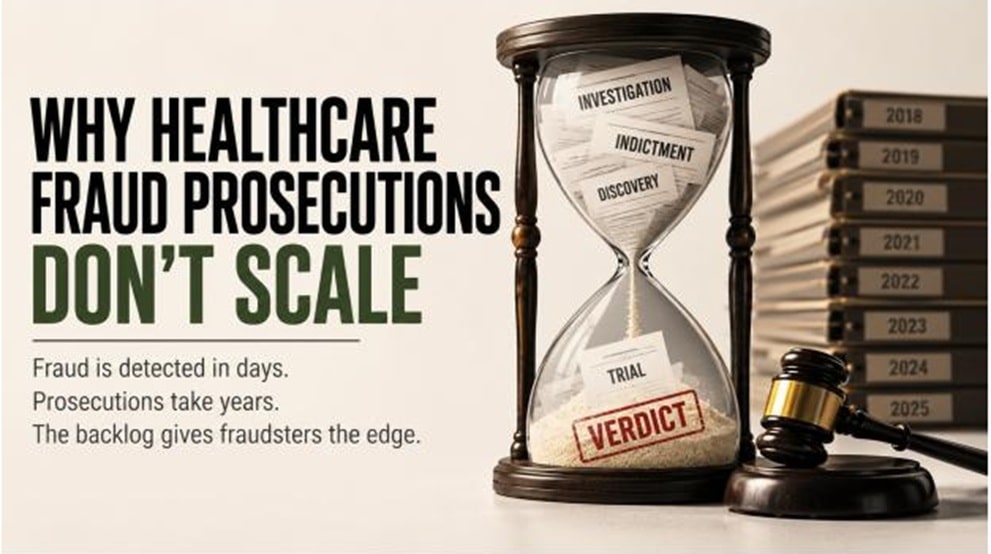
It’s an indictment of a regulated financial system that moves at an exhausting pace and plays into the hands of attackers who are quick on their feet and masters of illusion.
Individuals today have to turn to outside providers to get justice for themselves. Attackers have caught on. In an especially cruel wave of attacks, they now pose as recovery services or as some federal agency. “We found your stolen funds,” they’ll say. “There’s just a small tax you need to pay before we can release the money.”
All the world’s a stage, and scammers can play any role they like without interference. Add a little AI, and anyone might believe them too.